Find soundbar with subwoofer and remote control for Home, Karaoke, TV
Source 30 units of soundbar with subwoofer and remote control designed for home theater, karaoke, and computer setups. Buyers can compare active amplification, Bluetooth connectivity, and battery life across models like BS-83 and BS-63.
Key considerations
Products List


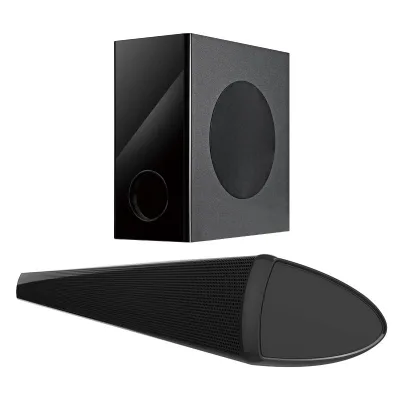


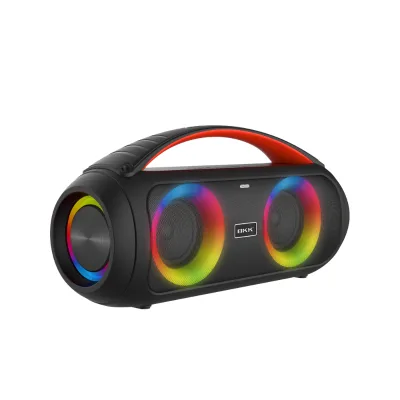


Comprehensive Sourcing Guide
Strategic Sourcing Guide for Soundbars with Subwoofer and Remote Control
Understanding the Core Product Architecture and Technical Specifications
When sourcing a soundbar with subwoofer and remote control, buyers must first distinguish between the various architectural configurations available in the market. The product landscape is defined by specific channel configurations, power outputs, and connectivity options that directly influence audio performance and installation requirements. Based on observed market data, these systems frequently appear in 2.0, 2.1, and 2.1 channel configurations, where the "2.1" designation typically indicates two satellite speakers paired with a dedicated subwoofer to enhance bass response.
The power output of these units varies significantly, with observed specifications ranging from nominal ratings of 15W per channel to total outputs reaching 60W. It is critical for procurement teams to verify the distinction between RMS (Root Mean Square) power and PMPO (Peak Music Power Output). While some listings cite PMPO figures such as 30W, this metric often inflates the perceived capability of the device. A more reliable indicator of sustained performance is the Watts Per Channel rating, which in many observed units remains below 50W. This suggests that these systems are optimized for home theater environments, computer audio, and portable mobile usage rather than large-scale commercial installations.
Connectivity is a primary driver of value in this category. Modern soundbars with subwoofers and remote controls are expected to support a diverse array of audio inputs. Observed specifications highlight support for Bluetooth, HDMI (specifically ARC), Optical, and Coaxial inputs. The inclusion of HDMI ARC (Audio Return Channel) is particularly vital for modern television setups, allowing a single cable to manage both audio and control signals. Furthermore, the presence of USB disk support and memory card slots adds versatility for users wishing to play media directly from storage devices without relying on a connected source.
The physical dimensions and weight are also essential for logistics and placement planning. Units with dimensions around 628.78cm or 54058.374mm indicate a compact form factor suitable for mounting or placement beneath a TV. The inclusion of a subwoofer increases the overall footprint, with gross weights for complete sets often reaching 7.5kg. Buyers should note that the cabinet material is predominantly plastic, which affects both the acoustic properties and the durability of the unit. While plastic is lightweight and cost-effective, it may not offer the same resonance damping as wood or metal enclosures found in higher-end audiophile systems.
Compliance, Certification, and Safety Standards Verification
In the global procurement of consumer electronics, particularly audio equipment, verifying compliance with safety and quality standards is non-negotiable. While specific certification marks were not explicitly listed in the observed product data, buyers must ensure that any supplier provides evidence of adherence to international safety standards. For audio products originating from major manufacturing hubs, compliance with electrical safety regulations is paramount to prevent hazards such as overheating, short circuits, or battery failures.
The power supply specifications observed in the market, such as 15V/4.5A or 9V/3A, indicate the need for external power adapters or internal power management systems that must meet strict voltage and current stability requirements. Buyers should request documentation confirming that the power adapters comply with relevant regional standards, such as UL (USA), CE (Europe), or CCC (China). The absence of a specific certification label in a product listing does not imply non-compliance, but it necessitates a rigorous request for test reports from the supplier.
Battery safety is another critical area of concern, especially for units featuring wireless subwoofers or portable soundbars. Observed battery specifications, such as 2000mA at 7.4V, require verification against lithium-ion safety standards. The charging time, observed in the range of 1-3 hours, and the estimated battery life of 15-20 hours, suggest a design focused on extended usage. However, the longevity and safety of these batteries depend heavily on the quality of the cells and the protection circuits employed. Procurement teams should verify that the supplier adheres to standards regarding battery overcharge protection and thermal management.
Furthermore, the electronic components within the soundbar, including the Bluetooth module (observed as version V6.3 in some listings) and the amplification circuitry, must comply with electromagnetic compatibility (EMC) regulations. These regulations ensure that the device does not emit excessive interference that could disrupt other electronic devices and that it is immune to external interference. Buyers should explicitly ask suppliers for EMC test reports to ensure the product will function reliably in a typical home environment without causing or suffering from signal degradation.
Cost Drivers and Pricing Dynamics in the Audio Market
The pricing of soundbars with subwoofers and remote controls is influenced by a complex interplay of factors, including component costs, manufacturing complexity, and branding. The observed price range of 1 to 102 USD indicates a highly segmented market with significant variance based on specifications and build quality. At the lower end of the spectrum, products likely utilize more basic components, such as plastic cabinets, lower-power amplifiers, and simplified Bluetooth modules. These units often target price-sensitive consumers or serve as entry-level accessories for basic television setups.
Conversely, products at the higher end of the price range may incorporate advanced features such as superior sound channel separation, higher wattage outputs, and more robust connectivity options. The inclusion of a dedicated subwoofer is a primary cost driver, as it requires additional drivers, a larger enclosure, and a more powerful amplifier channel. Additionally, the integration of a remote control with specific functions, such as memory card support or USB disk playback, adds to the overall bill of materials and manufacturing complexity.
Material costs also play a significant role. While the majority of observed units feature plastic cabinets, the type of plastic and the molding process can vary. High-quality ABS plastic or injection-molded components with better acoustic damping properties will increase production costs. The weight of the unit, with net weights ranging from approximately 1.9kg to 7.5kg for complete sets, reflects the amount of material used and the size of the drivers. Heavier units often correlate with larger drivers and more substantial power supplies, which generally command a higher price point.
Minimum Order Quantity (MOQ) is another critical factor affecting the total cost of procurement. The observed MOQ range of 1 to 2000 units suggests that suppliers cater to both small-scale buyers and large distributors. For buyers seeking to minimize upfront capital expenditure, suppliers with lower MOQs are preferable, even if the unit price is slightly higher. However, for large-scale procurement, negotiating a lower unit price through higher volume orders can significantly impact the overall cost structure. Buyers should also consider the impact of packaging, as the use of carton or box packaging with specific dimensions (e.g., 90127cm or 68.52030.5CM) affects shipping costs and storage efficiency.
Typical Applications and Usage Scenarios
The versatility of soundbars with subwoofers and remote controls makes them suitable for a wide range of applications, from home entertainment to professional and portable uses. The primary application is undoubtedly the home theater system, where the combination of a soundbar and subwoofer provides an immersive audio experience that surpasses standard television speakers. The observed usage categories explicitly include home theater, karaoke, and computer audio, highlighting the device's adaptability to different entertainment needs.
In the home theater context, the support for HDMI ARC, Optical, and Coaxial inputs allows for seamless integration with modern televisions and media players. The ability to play content from USB disks and memory cards adds convenience for users who prefer local media storage over streaming services. The inclusion of a remote control is essential for this application, enabling users to adjust volume, switch inputs, and control playback without needing to interact directly with the device.
Karaoke is another significant application, particularly in markets where social entertainment is a priority. The active amplification type and the support for multiple audio inputs make these systems ideal for karaoke setups. The remote control facilitates easy operation during performances, allowing users to adjust microphone levels or switch between music and voice modes. The battery life of 15-20 hours ensures that the system can support extended sessions without the need for frequent recharging, which is crucial for portable karaoke setups.
For computer and mobile users, the Bluetooth connectivity and support for USB devices offer a convenient way to enhance audio output for gaming, music listening, or video conferencing. The compact dimensions of the soundbar allow it to be placed on a desk or shelf without taking up excessive space. The support for various devices, including tablets, laptops, and smartphones, ensures compatibility with a wide range of modern gadgets. The "Universal" compatibility attribute observed in the data further reinforces the device's ability to work with diverse sources, making it a versatile choice for tech-savvy consumers.
Supplier Evaluation and Quality Control Protocols
Selecting the right supplier is a critical step in the procurement process, requiring a thorough evaluation of their capabilities, reputation, and quality control measures. Buyers should prioritize suppliers who demonstrate transparency in their manufacturing processes and provide detailed product specifications. The observation of specific product models, such as BS-83 and BS-63, indicates that suppliers often have distinct product lines with varying features. Buyers should request detailed datasheets for each model to ensure that the specifications match their requirements.
Quality control protocols are essential to ensure that every unit meets the agreed-upon standards. Buyers should inquire about the supplier's inspection procedures, including pre-production, in-line, and final inspection stages. The use of standardized packaging, such as cartons or boxes with specific dimensions, suggests a level of organization in the supply chain. However, buyers must verify that the packaging is robust enough to protect the product during transit, especially given the weight and fragility of electronic components.
Supplier evaluation should also include an assessment of their customization capabilities. The observed availability of customization suggests that suppliers are willing to tailor products to meet specific buyer requirements, such as branding, color, or feature modifications. This flexibility can be a significant advantage for buyers looking to differentiate their products in the market. However, customization often comes with higher MOQs and longer lead times, which must be factored into the procurement plan.
Finally, buyers should verify the supplier's track record in delivering products that meet safety and performance standards. Requesting references from other clients and reviewing past performance data can provide valuable insights into the supplier's reliability. It is also advisable to conduct sample testing before placing a large order to ensure that the product meets the expected quality and performance benchmarks.
Long-Term Procurement Considerations and Strategic Planning
Sourcing soundbars with subwoofers and remote controls is not just a transactional activity but a strategic decision that impacts long-term business operations. Buyers must consider the lifecycle of the product, including availability of spare parts, firmware updates, and after-sales support. The rapid evolution of audio technology means that products may become obsolete quickly, so it is essential to choose suppliers who are committed to continuous innovation and support.
Supply chain resilience is another critical factor. The observed origin of products in China highlights the importance of understanding the geopolitical and logistical landscape of the region. Buyers should develop contingency plans to mitigate risks associated with supply chain disruptions, such as raw material shortages or transportation delays. Diversifying the supplier base can help reduce dependency on a single source and ensure a steady flow of products.
Sustainability is also becoming an increasingly important consideration in procurement. Buyers should evaluate the environmental impact of the products, including the use of recyclable materials and energy-efficient designs. The plastic cabinet material observed in many units may present challenges in terms of end-of-life disposal, so buyers should explore options for sustainable materials or recycling programs.
Finally, buyers should establish clear communication channels with suppliers to ensure that any issues are addressed promptly. Regular performance reviews and feedback loops can help improve the quality of the products and the efficiency of the supply chain. By taking a proactive approach to procurement, buyers can build strong, long-term relationships with suppliers and secure a competitive advantage in the market.
FAQs
What connectivity options does the soundbar support?
The soundbar supports Bluetooth, HDMI ARC, Optical, and Coaxial inputs. It also features memory card and USB disk support for direct media playback without a connected source device.
Can the system be customized for specific needs?
Yes, customization is available for this product line. Buyers can request specific configurations to meet unique requirements while maintaining the core functionality of the wireless speaker system.
How long does the battery last on a full charge?
The estimated battery life ranges from 15 to 20 hours on a single charge. The battery requires 1 to 3 hours to fully charge using the included accessories cable.
What is the power output capacity of the unit?
The system offers an output capacity of 60W with a PMPO rating of 30W. The nominal voltage is specified as 15W per channel for the active amplification type.
Which devices are compatible with this audio system?
The system is universally compatible with TVs, PCs, phones, tablets, laptops, and MP3 players. It supports multiple usage scenarios including home theater, karaoke, and computer audio applications.
What is the net weight of the complete speaker set?
The net weight of the unit is approximately 1.9kg plus 1.85kg for the complete set. The gross weight for shipping is recorded at 7.5kg including packaging materials.
Does the product include a remote control?
Yes, the product comes with a remote control as a standard special function. This allows users to manage memory card support, USB disk playback, and other audio settings easily.